How Certification Timelines from Testing Labs Align with API Integrations from Multiple Studios to Enable Secure Bonus Activations in Wireless Slot and Table Environments
Ellis Lange · Jul 1, 2026
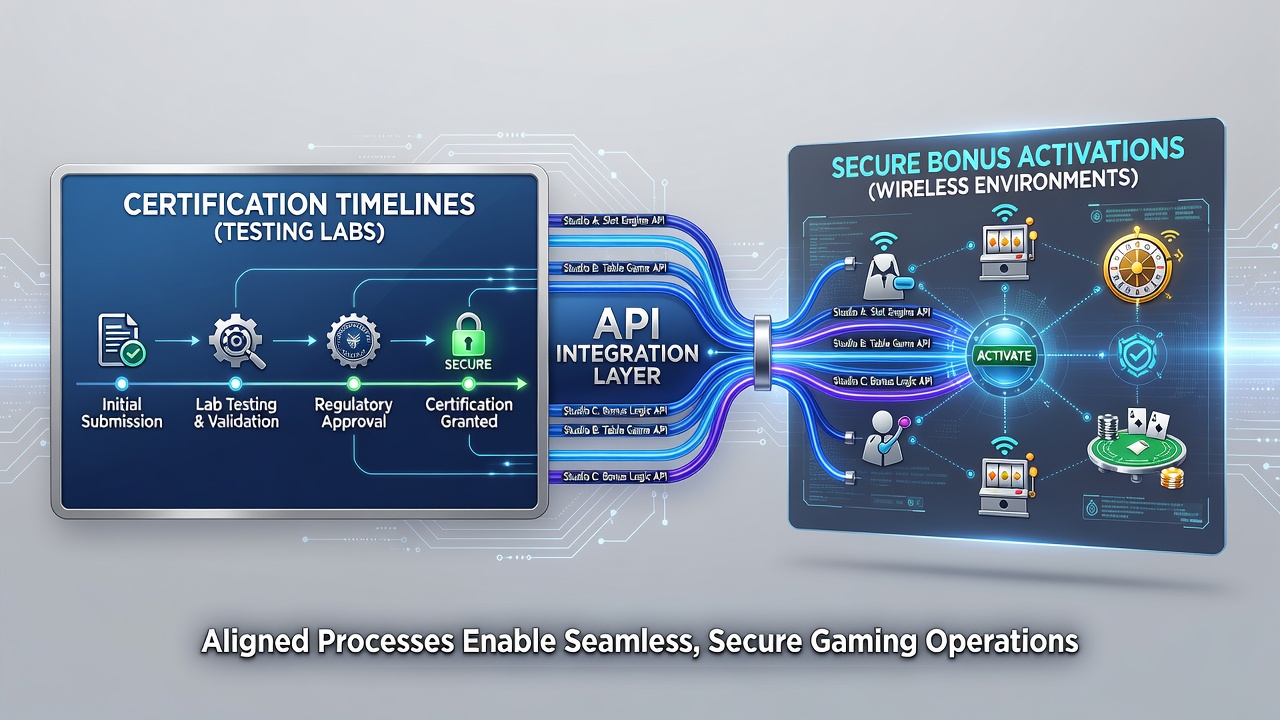
How Certification Timelines from Testing Labs Align with API Integrations from Multiple Studios to Enable Secure Bonus Activations in Wireless Slot and Table Environments
Testing laboratories such as Gaming Laboratories International and BMM Testlabs establish structured evaluation periods that typically span four to twelve weeks depending on game complexity and jurisdiction requirements while software studios coordinate API endpoints for bonus triggers across slot and table titles. These timelines intersect with development cycles from providers including Playtech, Evolution Gaming, and Aristocrat when operators seek to activate promotional features in mobile environments without introducing security vulnerabilities in RNG outputs or transaction ledgers.
Certification Processes and Their Standard Durations
Regulatory frameworks in multiple regions mandate sequential phases including source code review, mathematical modeling verification, and penetration testing before any title receives approval for live deployment. Observers note that a standard slot title with bonus mechanics often completes initial RNG certification within three weeks at labs located in Nevada or New Jersey, yet live dealer table integrations require additional scrutiny of video stream encryption and dealer interface APIs that extend the process by another four to six weeks. Data from the Nevada Gaming Control Board shows that multi-studio submissions submitted in batches during the first quarter of 2026 experienced average approval windows of nine weeks when wireless platform compatibility checks were included.
API Integration Requirements Across Studios
Studios maintain separate API documentation sets that specify authentication protocols, payload structures, and event callbacks for bonus activation events such as free spin triggers or multiplier applications on table games. When an operator aggregates titles from three or more providers onto a single mobile app, synchronization demands that each studio's bonus module maps to a unified wallet API maintained by the platform operator. Research indicates that misalignment in timestamp formats or encryption key rotation schedules between studios frequently delays final certification by two to three weeks because labs must retest the combined system after each correction cycle.
Synchronization Strategies Used by Operators in July 2026
Operators schedule API sandbox testing windows that coincide with the midpoint of lab certification phases so that identified issues can be resolved before final documentation submission. One approach involves establishing a shared staging environment where studios upload updated endpoints weekly while labs conduct parallel compliance scans on wireless network simulations. Figures reveal that projects following this parallel workflow in mid-2026 reduced overall time from initial submission to approved bonus activation by an average of eighteen days compared with sequential handoff models. Wireless environments introduce additional variables including variable latency on 5G connections and device-specific rendering differences that labs incorporate into their test matrices only after API stability is confirmed across all participating studios.
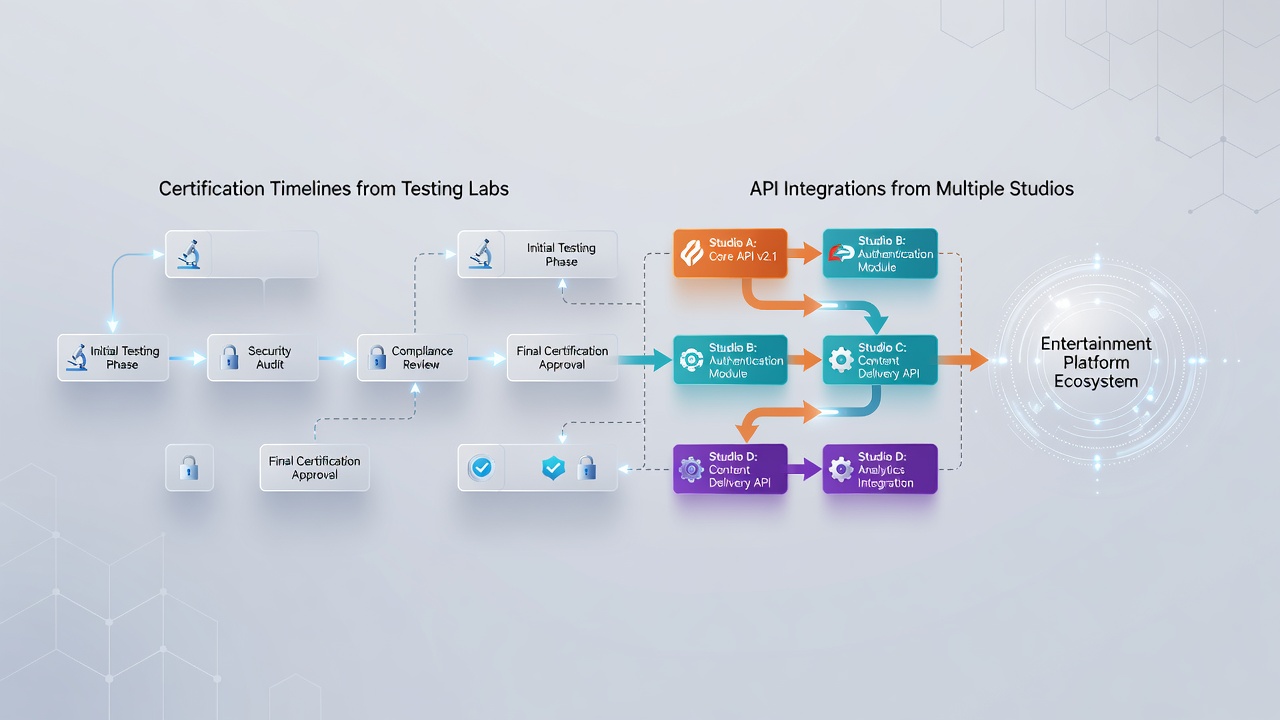
Security protocols for bonus activation rely on token-based authorization that expires after single use and logs every event to an immutable audit trail. When multiple studios contribute game logic, each API call must pass through a central orchestration layer that validates signatures before forwarding requests to the certified RNG or table engine. Those who manage large mobile portfolios report that labs require full disclosure of this orchestration code during the final certification stage, which can add seven to ten days if the code was developed after initial submissions.
Regional Variations in Timeline Expectations
Jurisdictions maintain distinct expectations regarding submission completeness and retesting triggers. In Ontario, for example, iGaming Ontario guidelines require labs to complete full regression testing whenever an API version changes by more than a minor patch, whereas certain Australian state regulators accept delta reports covering only modified modules provided the core RNG remains untouched. Operators coordinating releases across these markets therefore build buffer periods into project plans that account for the strictest jurisdiction's timeline rather than averaging across regions.
Practical Examples of Aligned Workflows
One documented rollout in early 2026 involved a European operator integrating four studios' titles into a mobile-first platform where live blackjack tables and video slots shared a common bonus wallet. The operator submitted preliminary API specifications to the chosen lab six weeks before the first code freeze, allowing parallel development of test harnesses while studios finalized encryption routines. The resulting certification completed in eight weeks total, and bonus activations functioned without interruption across both iOS and Android builds once the titles went live. Similar patterns appear in reports from Canadian and Asian markets where staggered studio onboarding reduced last-minute integration conflicts.
Conclusion
Alignment between lab certification schedules and multi-studio API development cycles determines whether secure bonus features reach wireless slot and table environments on planned release dates. Operators who coordinate sandbox testing with certification milestones, standardize authentication methods across providers, and account for regional retesting rules achieve shorter overall timelines while maintaining compliance with security and RNG integrity requirements. Data continues to show that structured parallel workflows remain the most consistent method for managing these interdependent processes in 2026.